Main Points
- Allergy symptoms can feel worse when you’re inside your home, especially if your HVAC system is circulating them through the air.
- A dirty filter is one of the main causes of pollen circulating throughout your home.
- Cozy Home Services Cooling, Heating & Plumbing provides several services designed to improve indoor air quality and relieve allergy symptoms.
The spring pollen season is getting longer and more intense, and homeowners in Vacaville and Sacramento should know how HVAC and allergies may play a role in this seasonal affliction. You might not realize it, but there are several ways your HVAC system can let airborne allergens into your home. If you’re concerned about indoor allergens, the team at Cozy Home Services Cooling, Heating & Plumbing is a trusted local expert in improving indoor air quality and helping homeowners reduce allergens.
Why Allergies Can Feel Worse Inside Your Home
If you experience seasonal allergies, your symptoms might feel worse or more intense when you’re inside your home. This common problem can be due to several factors, including:
- Bedding, carpets, and upholstery can harbor and multiply dust mites.
- Damp areas in basements, kitchens, and bathrooms can encourage mold spores and mildew growth.
- Homeowners with pets often have pet dander indoors, which may exacerbate allergy symptoms.
- Pollen can enter your home through open windows and doors, covering hair, clothing, and pets, or settling into your carpets and furniture.
- High indoor humidity can encourage mold and dust mite growth.
How Pollen Gets Into Your Home Through the HVAC System
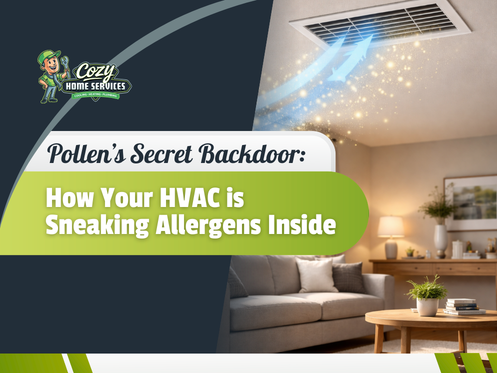
Your air conditioner and allergies might be related, as modern HVAC systems naturally pull in outdoor air, bringing pollen along. That pollen travels through the air vents and directly into the air you breathe in your home. If your air filter is dirty or clogged, it can’t trap the pollen effectively, so it passes right through and circulates into the air.
Pollen can also get into your house from HVAC ductwork with gaps or cracks, which allow the system to suck in the pollen from areas like your attic or crawlspace. Open doors and windows to bring in outside air, which can make pollen worse if your AC is running, since it’s immediately pulled into the return vents.
Can Air Conditioners Spread Pollen Around the House?
You might wonder, why is pollen getting in my house, and is my air conditioner to blame? While HVAC air filters are specifically designed to trap pollen and other airborne irritants before they get into your home, your AC can still spread pollen in your house if the filter is dirty or blocked. Eventually, the pollen settles in your ductwork, and when you turn the air conditioner back on, it disrupts the pollen, which re-enters the air supply, spreading it throughout the house.
Signs Your HVAC System May Be Circulating Allergens
If you or someone in your family has allergies, it’s important to recognize the signs that your HVAC may be circulating allergens in your home. Stale or musty odors are a common sign of mold, mildew, or bacteria growing in your ductwork, drain pan, or air handler.
Dust, dirt, or debris buildup around your vents and registers is a sign that your HVAC system isn’t filtering allergens properly. If it seems like your air filters are getting clogged with dust in just a few weeks, indoor allergies from the HVAC system will be much more noticeable.
How to Reduce Pollen and Allergens in Your HVAC System
Fortunately, there are ways to reduce pollen and improve HVAC-related issues with air quality and allergies. The most important step is to inspect your air filter regularly and replace it as soon as it appears dirty, before it’s completely clogged. Schedule a professional ductwork inspection to ensure that your air ducts are clean, intact, and free of cracks or damage. If any issues are found, have the current ductwork removed and install new ductwork with proper sealing at corners and joints to prevent allergens and pollen from entering.
Using an air filter with the appropriate MERV rating may also significantly reduce allergens and pollen in your HVAC system and home. An HVAC pollen filter with a MERV rating of 6-9 captures household dust, most dander particles, and large pollen. If indoor allergies are a major concern, a residential filter with a MERV rating of 10-12 is recommended.
Indoor Air Quality Improvements That Help Allergy Sufferers
Cozy Home Services provides several indoor air quality services to address HVAC allergens and help allergy sufferers:
- Air purification systems: We offer air purifier installations for your HVAC system to kill allergens and bacteria before they enter your home’s air.
- Ductwork services: Our professional ductwork inspections, new air duct installations, air duct cleaning, and duct sealing keep pollen out and improve indoor air quality when your HVAC is running.
- HEPA filters: Ask about HEPA filters specifically designed for your HVAC system to trap particles as small as 0.3 micrometers and capture even the tiniest airborne pollutants.
Indoor Air Quality Service Cost: What Factors Affect Pricing
Several factors may impact the cost of indoor air quality services. Large homes and multi-level homes require more time to assess and may also need more filters to clean the air effectively. Basic IAQ tests are more affordable than specialized testing for specific pollutants, such as mold or volatile organic compounds (VOCs).
Air duct cleaning and sealing is one of the most affordable options for improving indoor air quality. If you have multiple HVAC units or a high number of vents and registers, the cost of a whole-home air purifier is typically higher than for a single standard system with a typical number of vents.
What to Expect During an Indoor Air Quality Inspection
An indoor air quality inspection involves an in-person assessment, including a visual inspection for mold and moisture, and air sampling to test for contaminants. Tools such as moisture meters and particle counters are used to evaluate humidity levels, ventilation systems, and potential sources of pollutants. Once the inspection is complete, you’ll receive a detailed report with the results and recommendations for improvement.
Why Homeowners Choose Cozy HVAC for Indoor Air Quality Solutions
Homeowners choose Cozy for indoor air quality solutions thanks to our dedication to exceptional customer service on every job. We provide a hard-to-find level of expertise, using building science practices to deliver services you can trust.
Our company instills a culture and code of ethics that’s unmatched, making us the trusted expert for home services in the area. We’ve partnered with GoodLeap to offer flexible financing for indoor air quality upgrades and offer additional discounts and specials to help you save even more.
Contact Cozy Home Services Today!
If you’re dealing with pollen in your home, trust Cozy Home Services Cooling, Heating & Plumbing for reliable indoor air quality services. From air purifiers and duct cleaning to IAQ testing, contact us to schedule service and improve your allergy symptoms today!
Frequently Asked Questions
How does pollen get into a house with the windows closed?
Even closed windows have small gaps or cracks through which pollen can enter. Pets that come in and out repeatedly may also bring pollen into your home.
How often should I change my HVAC filter during allergy season?
During peak allergy season, change your HVAC filter every 30 days. If you have pets or severe allergies, you may need to change it every 20–30 days.
Why is there pollen dust around my air vents?
Pollen dust around air vents is typically caused by a clogged or low-quality filter that lets pollen bypass the system. It could also be caused by cracked or damaged ductwork that allows pollen to get inside and travel through your vents.