Main Points
- An AC that keeps shutting off may have problems with electrical components, refrigerant leaks, or worn-out parts.
- Homeowners can complete a few DIY checks before calling a pro.
- Repeated shutdowns usually mean the system needs professional repair.
Why Does My Air Conditioner Keep Shutting Down?
Air conditioners work hard to keep homes comfortable during Vacaville’s scorching summers, which strains them and increases the risk of breakdowns. Learn why your air conditioner keeps shutting down and how a professional HVAC technician can provide reliable solutions.
Is Your AC Shutting Down or Short Cycling?
AC shutdowns and short cycling are often used interchangeably, but they differ in behavior, consequences, and sources.
Air conditioner short cycling occurs when an AC turns on and off too frequently, failing to complete a full cooling cycle. Instead of running at sustained output with regular breaks, the system repeatedly blasts cold air for two to five minutes, pauses briefly, and starts again. These cycles accelerate wear, cause uneven cooling, and spike your energy bills.
An AC shutdown occurs when the system stops completely and cannot restart. Most ACs have automatic safety shutdown mechanisms that stop operation if they malfunction. This protects your equipment from further damage, but you may not be able to restart it until the malfunctioned component is repaired or replaced.
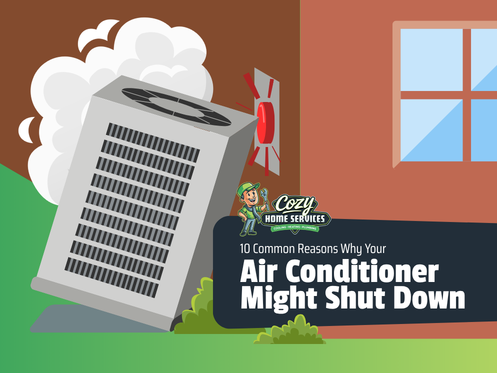
10 Common Reasons Why Your Air Conditioner Might Shut Down
Here are some reasons why your air conditioner shuts down by itself.
1. System overheating
Overheating is often due to dirty filters, obstructed vents, condenser problems, or low refrigerant. These issues strain AC equipment and can prevent it from properly expelling the heat it extracts from the indoor air, consequently triggering a safety shutdown to prevent compressor damage.
2. Electrical malfunctions
Short circuits from defective wiring, power surges, or overloads can trip breakers or blow fuses and cut your AC off from power. AC capacitors, which store and release energy to start and run the system, prevent your AC from starting if they fail. Faulty contactors or control boards may also disrupt signals between components.
3. Refrigerant leaks
Refrigerant absorbs and releases heat through the evaporator and condenser coils. When refrigerant pressure or levels are off, your AC operates inefficiently and strains other components, potentially escalating to overheating or a safety shutdown. Since refrigerant circulates throughout your system in a closed loop, low levels indicate leaks.
4. Dirty coils
Evaporator and condenser coils have a vital role in heat transfer. Dirt and dust can build up on the coils, insulating them, hampering cooling efficiency, and potentially leading to a shutdown.
5. Malfunctioning thermostat
Thermostat malfunctions are often due to damaged wiring, faulty sensors, dead batteries, or tripped breakers. If your thermostat malfunctions or becomes unresponsive, it may send incorrect signals to your AC unit or fail to send signals at all, causing erratic cycles or shutdowns.
6. Frozen evaporator coil
The evaporator coil houses refrigerant and absorbs heat before it transfers outside. If the coil freezes, it disrupts heat transfer, which may cause your system to overheat and shut down. Low refrigerant levels or dirt buildup can prevent the coil from absorbing enough heat, so the surface temperature drops and the nearby humidity freezes.
7. Age-related issues
As your AC system ages, its components gradually wear out, leading to decreased performance and unexpected shutdowns. Frequent breakdowns disrupt your comfort and can lead to high repair costs and efficiency losses.
8. Incorrectly sized unit
An AC unit that’s too small for your home won’t cool it effectively, resulting in continuous cycling and premature wear or failure. An oversized unit will rapidly cool your home in short cycles, which prevents it from evenly distributing conditioned air and regulating humidity.
9. Poor installation
Improper installation may encompass incorrect sizing, faulty wiring, poor ductwork design, or improper refrigerant charging, among other issues. These underlying inefficiencies increase the risk of breakdowns and reduce your system’s lifespan.
10. Neglected maintenance
Without regular maintenance, minor wear can escalate into bigger problems. While not a direct cause of shutdowns, neglected maintenance increases the likelihood of shutdowns.
Safe Things Homeowners Can Check First
There are several DIY strategies to try before calling an HVAC professional:
- Replace air filter: Inspect and replace any dirty air filters.
- Check thermostat settings: Ensure your thermostat is properly set, and replace its batteries periodically.
- Thaw your AC: If the evaporator coil is frozen, switch off your AC unit to let it thaw. Once thawed, restart the system and check whether the coil freezes again — if so, it warrants a professional inspection.
- Reset the breaker: If your AC tripped a breaker, the switch will be in the center position. Flip it to the off position, then to the on position to restore power.
- Open the vents: Check that your vents are open and unobstructed.
- Clear the outdoor unit: Clean dirt, branches, and other debris from the outdoor AC unit.
Signs the Problem Needs AC Repair, Not DIY
If your AC keeps stopping, it likely needs professional repairs. Call a professional for service if the problem doesn’t resolve or if you notice these signs:
- Repeated breaker trips
- Warm air from vents
- Strange noises
- Water pooling near the unit
- Odors
- High energy bills
When AC Maintenance Can Prevent Future Shutdowns
Regular AC maintenance can catch small problems before they turn into shutdowns. During a tune-up, a technician checks the filter, coils, electrical parts, refrigerant level, and overall system performance, then completes the necessary cleaning and adjustments.
These inspections spot issues early and keep the system running efficiently, which reduces strain on major parts, the risk of unexpected breakdowns during hot weather, and long-term costs.
When Replacing the AC May Be Smarter Than Another Repair
Replacing your AC sometimes makes more sense than paying for repairs. If the system is older, frequently breaks down, needs a major part, or no longer cools your home evenly and efficiently, an AC replacement may offer greater long-term savings.
In these cases, a new AC provides better comfort and reliability. When your central air keeps shutting off, a professional inspection can help you compare repair costs with the cost of replacing the unit.
What to Do Next if Your AC Shuts Down in Vacaville
If your AC shuts down in Vacaville, start with basic DIY checks. If these methods don’t fix the problem, or if you notice other red flags, leave the system turned off.
Running an AC with an unresolved issue can worsen the damage. The next step is to schedule a professional inspection with a technician who can identify the cause and provide an AC repair or replacement.
Schedule AC Help Before Repeated Shutdowns Turn Into a Bigger Repair
If your AC shuts off after a few minutes, hire a reputable, experienced HVAC professional for your air conditioning repairs and installation. Cozy Home Services offers plumbing, cooling, and heating services for customers in Vacaville and the surrounding areas. Contact us at Cozy Home Services to learn more.
Frequently Asked Questions
Why does my AC keep turning off, but the fan still runs?
If your AC shuts off but the fan keeps running, the AC may be overheating or have incorrect thermostat settings. The fan may continue circulating air even when cooling stops, which often points to a problem with components directly involved in heat transfer.
Can a dirty air filter make an AC shut down?
Yes, a dirty air filter can cause your AC to shut down by restricting airflow. This added strain can lead to overheating, frozen coils, or a system safety shutdown to prevent further damage.
Does high humidity affect AC performance or cause shutdowns?
High humidity makes your AC work harder to remove moisture from the air, increasing strain on the system. If airflow or refrigerant levels are imbalanced, the added demand increases the risk of shutdown.