What to Know
- If your AC coil freezes, immediately turn off your system, run the blower fan, and check the air filter for clogs or buildup.
- Frozen AC coils are almost always the result of restricted airflow or low refrigerant and require professional repair if the freezing keeps coming back.
- Cozy Home Services offers professional AC inspections and repairs that spot the underlying problem and restore cooling for your Northern California home.
What a Frozen AC Coil Means in the Summer
When you spot a frozen AC coil in the middle of summer, turning off your system right away can help prevent a minor issue from turning into costly compressor damage. Understanding why your AC coil is frozen is the next step, and what can keep it from happening again. Even in the 104-degree Vacaville heat, clogged filters or low refrigerant can cause ice to form on your coil and refrigerant lines. Below, we’ll explore why this happens, the immediate steps to take, and warning signs you need professional AC repair from Cozy Home Services.
What Is a Frozen AC Coil?
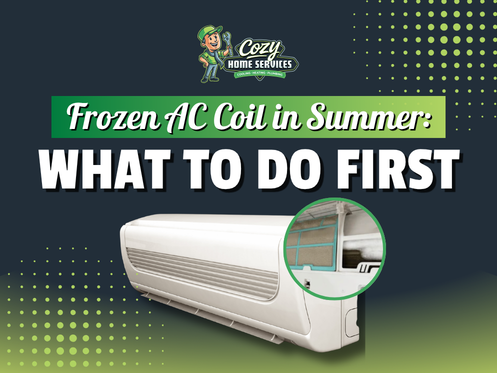
Curious why your AC freezes up in the summer? Freezing happens when a layer of ice forms on your system’s evaporator coil, the indoor component that absorbs heat from your home’s air. When something prevents it from absorbing heat or affects how air moves over it, condensation on the coil can freeze into a sheet of ice.
Once ice forms on the coil, it can no longer pull heat out of the air. You’ll often notice warm air blowing from your vents, little airflow when your air conditioner’s running, and ice building on the coil until you shut the unit down.
What Should You Do First When Your AC Freezes Up?
If your AC coil is frozen, immediately turn off the system at the thermostat. Continuing to run a frozen AC unit forces your compressor to work against ice and can lead to costly damage.
Next, switch the thermostat fan setting to “ON” to run the blower and circulate warmer air across the coil. While it thaws, check your air filter for clogs or buildup. Clogged filters are often the main culprit, and replacing them can be the easiest fix.
Once the coil thaws and you’ve replaced the filter, turn your AC back on and see how it performs. If it cools normally and the ice doesn’t return, a simple filter change was likely all you needed. If it freezes again, stop and call a professional as soon as possible.
Common Causes Cooling Coils Freeze
Frozen evaporator coils are almost always caused by restricted airflow or low refrigerant. When not enough warm air moves across the coil, there isn’t enough refrigerant to regulate the temperature, and the coil can drop below freezing.
Some of the most common culprits include:
- A dirty or clogged air filter, which is especially common with the Central Valley summer dust and wildfire smoke
- Blocked or closed supply vents preventing air from reaching the coil
- Dirty evaporator coils limiting airflow
- Low refrigerant from a leak disrupting the coil’s pressure
Can You Fix an Iced-Over AC Yourself?
If your air conditioner coil is frozen due to a minor airflow issue, you can often resolve the issue on your own. Turning off the system, running the fan to melt the ice, and replacing the air filter are all easy DIY steps that can fix a one-off freezing event. But if the frozen AC coil is due to a mechanical problem, a refrigerant leak, or a failing blower motor, you’ll need professional help to safely diagnose and repair it.
Frozen AC Coil Troubleshooting Checklist
Frozen AC Coil Troubleshooting
Frozen AC Coil: What Homeowners Can Check First
If your AC has ice on the coil or refrigerant line, these quick checks can help you know what to do safely before calling for professional service.
| What to Check | What It May Mean | Safe Homeowner Action | When to Call a Pro |
|---|---|---|---|
| Ice on indoor coil or line | Coil is frozen | Turn cooling off and let it thaw | If ice returns |
| Dirty air filter | Low airflow | Replace filter | If freezing continues |
| Closed vents | Restricted airflow | Open vents and clear obstructions | If airflow still feels weak |
| Weak air from vents | Blower or duct issue | Check filter and vents | If airflow remains poor |
| AC not cooling after thawing | Deeper system issue | Restart once thawed | If cooling does not return |
| Ice returns quickly | Refrigerant or mechanical issue | Turn system off | Schedule AC repair |
Homeowner Tip: If ice returns after the system thaws, turn the AC off and schedule service. Repeated freezing can point to low refrigerant, restricted airflow, or a mechanical issue that can damage the system if ignored.
Is a Frozen AC Coil Dangerous for Your AC System?
When your AC is frozen inside the unit, it can cause serious damage if you continue to run your system. When ice blocks the coil, liquid refrigerant can return to the compressor and destroy it, causing your entire system to shut down and leaving you with a costly replacement. As the ice melts, water can also overwhelm the drain pan and spill onto floors, drywall, and nearby belongings, leading to water damage and mold growth.
Repair vs. Replacement: What If the Problem Keeps Coming Back?
If your air conditioner keeps freezing up, there’s often an unresolved problem that requires repair or replacement. The right choice for your system depends on its age and condition.
Repeated freezing is usually due to a refrigerant leak or a failing blower motor that needs a quick repair, or a coil that needs professional cleaning. Replacement becomes a better long-term investment when your AC is over 10 years old and repair costs are starting to add up. Recurring freezes on an aging unit that’s already struggling in the Solano County heat can cost you more in the long run. A certified HVAC technician can evaluate your system, walk you through your options, and help you decide what’s best for your budget.
How to Stop Your AC From Icing Up Again
Keeping up with regular maintenance is the best way to prevent ice from returning to your AC coil. Scheduling a pre-season tune-up in early spring helps catch hidden issues, like low refrigerant and dust buildup, that can cause your coils to freeze and repair them before the summer heat arrives. Replacing your air filter every one to three months, and more during the dusty Central Valley summers, also keeps airflow steady and eases strain on the system.
In between professional tune-ups, there are also a few other at-home tasks you can do to keep your system ice-free:
- Keeping supply and return vents open and unblocked
- Looking for warning signs like weak airflow or humid indoor air
- Clearing debris from the outdoor unit
- Setting your thermostat around 78℉ instead of the lowest setting
Should You DIY or Call a Pro
DIY vs Professional AC Repair
Should You DIY or Call a Pro?
Some frozen AC problems are safe to check on your own. Others point to refrigerant, electrical, blower, or drainage issues that need professional service.
| Situation | DIY Check Is Okay | Call a Professional |
|---|---|---|
| Dirty filter | Yes | If freezing returns |
| Closed vents | Yes | If airflow stays weak |
| Ice on coil once | Yes, thaw first | If it happens again |
| Low refrigerant suspected | No | Yes |
| Blower not working | No | Yes |
| Hissing or electrical noise | No | Yes |
| Water around unit | Basic cleanup only | If leaking continues |
Homeowner Tip: DIY checks are best for simple airflow problems like a dirty filter or closed vents. If freezing comes back, the blower stops working, or you hear hissing or electrical noise, turn the system off and call a professional.
How Cozy Home Services Can Help
If your AC coil keeps freezing or won’t thaw after troubleshooting, contact Cozy Home Services for a professional inspection. We proudly serve homeowners throughout Vacaville, Sacramento, and surrounding Northern California communities with expert repairs, maintenance, and replacements, so you’re always covered when the next heat wave puts your AC to the test.
Frequently Asked Questions
How long does it take for a frozen AC coil to thaw?
AC coils can take anywhere from one to several hours to thaw, depending on how much ice has built up. After turning off your system, running the blower fan can help speed up the process by moving warmer air over the ice.
Is a frozen AC coil an emergency?
A frozen AC coil can be an emergency when it leaves your home without cooling during a Sacramento Valley heat wave. If you notice warm air blowing from your vents, weak airflow, and ice on the AC coil or line, contact our team for emergency AC repairs.
Can I pour warm water on the coil to melt the ice?
Pouring warm water on a frozen AC coil can damage your system’s electrical components and create an even more serious problem. Running the blower and letting the ice melt is the safest approach to clear off the ice without harming the system.